
How to Make Money from Land While Hosting Wind Turbines
 Topic: is wind energy worth it Topic: is wind energy worth it |  Read Time: 11 mins Read Time: 11 mins |
 Landowner type: Landowner type:Independent landowners | Institutional landowners |  Energy: Onshore wind Energy: Onshore wind |
 11th September 2023
Are you looking to make more money from your land? Hosting wind turbines could be your answer.
In this blog, I’ll explore how landowners across the UK are not just earning rental income by leasing their land, but also unlocking additional income streams through on-site turbines.
While getting wind turbines on your land can be a lengthy and complex process, it’s becoming more common in the UK as the government moves towards its net-zero targets. At Lumify Energy, we’ve helped landowners from Scotland to Devon, guiding them through the process and revealing multiple ways they can benefit financially.
But it’s not just about leasing your land. I’ll show you how the right strategy and well-worded contracts can open up opportunities for additional income. Whether it’s channelling energy to other projects or leasing unused land, there are ways to maximise your returns.
If you’re considering hosting turbines on your land, this blog will highlight key strategies and options to help you make the most of your land’s potential.
The Best Ways to Make Money From Land While Hosting Wind Turbines
1. Education
If you’re interested in making money from land you own while supporting environmental education, you’re in luck.
Since the average wind farm still offers ample space for farming and activities, some landowners use this land to host community projects.
With growing interest in sustainability and renewable energy, these initiatives are becoming an increasingly popular addition to school curriculums.
As schools place more emphasis on hands-on learning, hosting educational visits could become a valuable income stream for landowners.
Organisations like The Education People run dedicated day visits to established environmental sites, where children learn about the environment and energy through outdoor learning experiences.
These trips often focus on river exploration or sites of historical importance, but wind farms also provide an excellent opportunity to showcase renewable energy in action.
Before your land can be used for these educational visits, it will need to be vetted to ensure it’s suitable for school groups. As long as you choose a location that’s sufficiently distanced from active turbine areas, hosting school visits could be a great way to generate additional income.
And it’s not just ecological exploration that schools are interested in (AKA: finding critters and local flora on your land). You could also earn income from these organisations by showing children how wind energy works.
By offering them the chance to see and understand turbines up close, you’re introducing a new generation to the magic of renewables.
What about Countryside Stewardship Grants?
You may have heard of the Countryside Stewardship grants (CS), which were introduced to improve a farm’s overall profitability while promoting environmental sustainability.
According to Breedr, it’s:

These grants can be as much as £60,000, depending on the land in question, making them an excellent income earner for eligible sites.
While the eligibility criteria are relatively strict, searching for options and supplements has been made quite simple via GOV.UK.
There are currently three separate grants under the Countryside Stewardship:
- Standalone capital grants.
- A Woodland Support grant that aims to restock and improve woodland areas.
- An Implementation Plan and Feasibility Study grant that provides funding for complex agreements and projects.
Who is eligible for Countryside Stewardship?
The Countryside Stewardship grants are available to farmers, woodland owners, foresters and land managers.
Although the scheme is highly competitive, many landowners may be eligible on the grounds of ‘enhancing education’.
However, this criterion is only offered at the highest tier of application, so it’s worth doing your research before applying.
It’s also important to note that the Countryside Stewardship grants are taxed as revenue. So, you’ll need to account for this at the end of the tax year.
If you’re considering waiting for the rollout of new environmental land management schemes in 2024, you may still want to apply.
The scheme allows landowners to apply now and switch over to a new program when the time is right.
2. Lease or use the space for other renewable energy projects
One of the best ways to make money from land you own is by leasing additional space for other renewable energy projects.
And with the UK aiming to generate 100 per cent of its energy from renewables by 2050, every little certainly helps.
Many sites can support multiple projects, making it worth considering whether your land can host more than one. After all, running two projects at once could significantly boost your earnings.
Is your land suitable for more than one project?
As I mentioned earlier, the viability of different energy projects depends on your land’s size and location.
For example, if you’re in a coastal region with high wind speeds but minimal sunlight, adding more wind projects (rather than solar panels) might make the most sense.
In contrast, if you’re on a flat section of land with plenty of sun exposure, this could be ideal for solar panels.
If you have land that could support both wind and solar, diversifying your energy projects could be a smart move.

So, how much money could I make from leasing my land for a solar project?
Like wind farms, solar farms require development and a serious upfront investment (to purchase and install the panels).
However, unless you plan to self-develop as a landowner-developer, these costs will fall on the developer – not you.
The good news is that most solar farms pay off their initial costs within five to 10 years and require minimal ongoing maintenance.
Solar farm rents currently sit at around £750 per acre, so the potential income from leasing your land is significant.
But if you’re already grid-connected (thanks to your existing wind farm), adding another project may be easier. This is especially true if you set up the new project with the same developer.
In some cases, using the same energy type (i.e., another wind project instead of solar) could be more straightforward, so it’s worth considering all options.
Another major thing to consider is that solar leases typically run for around 30–50 years. This is significantly longer than the 20–25 years cited for the average wind farm.
So, by leasing your land to a solar project, you’ll receive guaranteed rental income for decades.
And if you use a few simple negotiation tools, you can ensure your income remains index-linked over time.
Just keep in mind that solar farms require large amounts of space and must be protected from environmental risks.
Solar panels have to be kept a safe distance away from wind turbines. This is because, in the winter, ice often forms on the turbine blades. When melting, this can fall onto the solar panels and cause significant damage to the glass panels.
3. Data centres for landowners
Data centres store applications, data and servers so a company can centralise its IT operations.
They usually store a company’s most valuable assets, so they’re incredibly important.
At their core, data centres rely on servers – computers or programs that manage access to this centralised data via a network.
But with this constant network activity comes enormous energy demands.
On average, a server uses between 1,800 to 1,900 kWh every year.
For large-scale professional-grade servers handling a vast number of users, the space required to host and store the servers rises tenfold.
Relocating data centres from populated cities into rural areas could not only help meet this demand but also free up space for housing development in hotspots like London.
With an impressive 175-hectare 600 MW site planned for Havering, it’s clear that moving centres out of cities is already gaining popularity.
While the Dutch government is now discouraging the use of farmland for such projects, the UK’s growing demand for data storage could make rural data centres a profitable opportunity for landowners.
To give you some context, the rise of large data centres on farmland has been well-documented in the Netherlands.
Microsoft runs two enormous data centres on farmland in Hollands Kroon.
While the Dutch government is now discouraging the use of farmland for such projects, the UK’s growing demand for data storage could make rural data centres a profitable opportunity for landowners.
Savill’s predicts that the European data centre power capacity is expected to reach 9,000 MW by 2025.
To meet this demand, the number of available data centres would need to increase by 2.5 times.
So, what does this mean for landowners?
While this changing landscape won’t be to everyone’s taste, leasing land for data storage facilities could provide a lucrative income stream for landowners.
For small and medium-sized businesses, renting local server storage can be a cost-effective alternative to large-scale data centres, freeing up space in their main offices while benefiting from cheaper rural land rents.
It’s also interesting to note that Scotland’s rural land market has been significantly changing shape over the years.
According to the Scottish Land Commission, non-farming buyers (including investors) have purchased over 40 per cent of farms in the UK.
Although I can’t say what this land will eventually be used for, storage is a possibility.
For landowners, hosting data centres could mean:
- Steady rental income from leasing land to tech companies.
- Increased land value due to growing demand for rural data storage.
- Potential synergies with renewable energy projects, reducing costs for both parties.
With energy demands rising and available land in cities becoming scarce, rural areas could play a key role in the future of data storage infrastructure.
4. Dairy farming
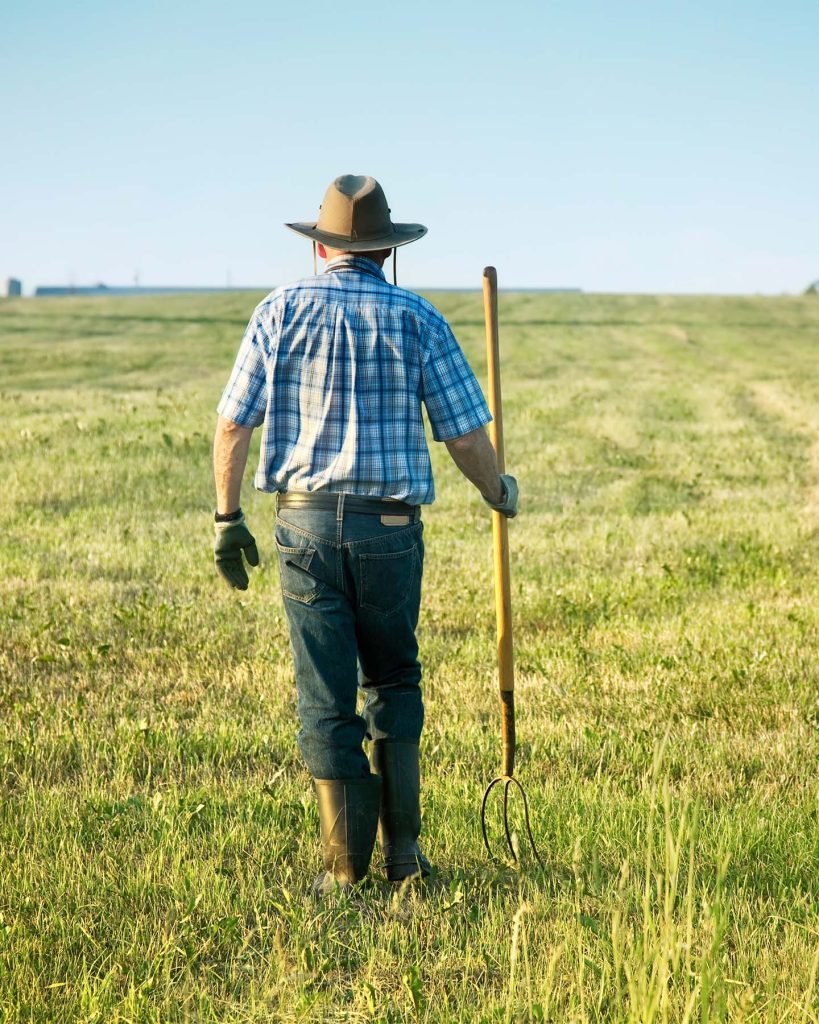
I’m not suggesting that getting into dairy farming will make you rich overnight.
But for existing dairy farmers, hosting wind turbines (and reaping the rewards from them) could save a significant amount of money, providing a crucial income buffer, helping offset rising energy costs and fluctuating milk prices.
If the numbers stack up, having a renewable energy project on your land could make dairy farming a lot more profitable.
The financial challenges facing dairy farmers
Dairy farming and processing is incredibly expensive, with energy prices majorly ticking upward, everything from cattle feed to machinery costs has soared.
These expenses have risen sharply in recent years due to:
- Higher energy costs, driving up production expenses.
- Falling milk prices, squeezing already tight profit margins.
- Rising feed prices, which soared from £214/tonne before the Ukraine war to £310/tonne.
This was already a significant problem. Mass farm closures have become common, with 1 in 10 dairy farms closing down between 2013 and 2016. By 2020, the number of operational dairy farms had fallen by 67% since 1995.
So, what does this mean for making money from my land?
For dairy farmers, incorporating renewable energy projects on their land isn’t just about earning rental income – it’s also about cutting operational costs.
I recently worked with Lancaster cheesemakers Dewlay to recover lost rental income using our SiteView360 solution.
By running a functioning wind farm and a dairy farm, they were able to reduce their energy bills significantly.
And that’s because the turbines helped produce electricity that fed into the energy-intensive dairy-producing process.

Our turbine enables us to reduce the high energy bills in what is an energy-intensive industry, as well as reduce our business carbon footprint.
Nick Kenyon, Dewlay
It’s one thing that running and housing the turbines provided excellent rental income.
But by generating their own electricity, Dewlay managed to lower their energy bills while simultaneously reducing their carbon footprint. This approach helped them stay competitive in an increasingly challenging market.
Things to Consider Before Making Money From Your Land
If you’re trying to generate extra income from land currently hosting wind turbines, you need to consider a few things first.
These mostly relate to the legalities of the activities or projects you’re trying to host.
But you’ll also need to figure out whether your land is actually suited to running additional projects.
Finally, it’s also important to remember that you need to have the capital to build new income streams.
Whether that’s purchasing specialist farming equipment or constructing new buildings, the upfront cost of new ventures can be hefty.
The size of your land (and where it is)
The size and location of your land will be the first thing you’ll need to look at critically.
If you’re already hosting wind turbines on your land, you probably have a decent amount of wind flowing through your property.
Secluded wind farm sites can provide an ideal setting for educational visits, giving school children a chance to learn about renewables in a relaxed space.
The most important thing you’ll need to consider is whether you have enough spare acreage and whether your planned project will be safe.
For additional renewable energy projects, space is critical.
As mentioned earlier, wind turbines will need to be placed a good distance away from solar panels.
This is especially true if you’re hosting a project with two different developers.
Legalities
Before you set up any new project on your land, you need to put your legal ducks in a row.
This includes getting any necessary planning permission.
It’s worth discussing this with a land agent in advance to make sure you won’t face any hurdles during the planning process.
What your developer allows
Many developers simply won’t want additional projects on land they’re leasing.
There are often clauses within lease agreements that stipulate what you can place close to a wind farm. This is to prevent potential vandalism and damage to their valuable equipment.
Now, developers won’t have control over the entire plot of land. But they will generally discourage projects with a large turnover of guests.
If you haven’t signed a lease agreement, now would be the time to discuss future plans with your project developer.
Especially in the case that you’d like to use some of the energy from the turbine with another venture, such as dairy farming or hosting additional projects.
In these cases, you’ll need a separate Power Purchase Agreement (PPA) in place for the energy to be sold to you, the landowner.
This is in addition to the PPA that usually exists between the project developer and the energy off-taker.
Just something to think about.
Setting aside the necessary cash to get a new wind project up and running
If you’re not already aware, you need a lot of equipment to run the average wind farm.
The same applies to virtually any renewable energy project on your land.
You might already have decent cash reserves to fund an additional income stream. But you’ll need to consider everything from admin costs to the temporary loss of other revenue when planning your project.
This is particularly relevant for landowner-developers wanting to make money from land they own by investing in equipment.
It’s always a good idea to speak with a land agent about potential costs. They’re excellent people to consult for legal fees for lease agreements or for hiring accountants.
It’s worth noting that developers typically offer reliable payments for any additional renewable energy projects you host on your land.
However, other streams can naturally take longer to get going.
For this reason, you might need to investigate financing options, set-up costs and any fees associated with licensing.
On the plus side, additional projects on your land will eventually become lucrative (well, most of them).
A developer should always pay you the market rate for any inconvenience caused by hosting a new renewable energy project on your land. To make sure you’re not missing out on any income, check out our Lumify SiteScan™ solution. It scans the market to check what developers are paying other landowners in bonus payments and construction rents.


Compare your rent with hundreds of wind farms across the UK
Get the best possible lease with help from the UK’s top solicitors
100% of landowners we work with increase their rent negotiation offers
The projects you already have on your land
If you already have a business or project on your land, generating energy from turbines could save you a lot.
This makes installing a new wind farm on your land a huge plus.
However, it’s also important to consider whether a new project will require the construction of any new buildings.
These can be quite large. So, you’ll need to check whether you have adequate room and whether your existing planning permission covers them.
This is particularly important if you’re trying to build on green belt land.
So, before moving forward, landowners will need to assess the viability of any new ventures. This particularly relates to any existing projects on the land.
Final Thoughts
As you can see, there are plenty of innovative ways to make money from the land you own. And that’s without needing to invest thousands of pounds to get started.
Many landowners approach me worrying that their wind turbines will decrease the value of their property.
But I always reassure them that wind farms are a net benefit (that won’t affect the rest of their land’s earning potential).
While wind farms can be major revenue drivers for landowners, there’s no reason to let any remaining land sit idle.
So, whether you’d like to host a second renewable project or simply want to invest in storage – the options are all there.


