
The Ultimate Guide to Investing in Renewable Energy
 Topic: renewable energy finance Topic: renewable energy finance |  Read Time: 16 mins Read Time: 16 mins |
 Landowner type: Landowner type:Independent landowners | Institutional landowners |  Energy: Energy:Hydroelectric | Landfill gas | Offshore wind | Onshore wind | Solar |
 13th May 2026
Investing in renewable energy has become one of the UK’s most exciting financial opportunities. For landowners, funds, businesses and individual investors, it offers stable returns, long-term value and a direct stake in the world’s energy transition.
At a project level, returns from wind and solar typically sit between six and 10 per cent per annum, depending on the technology, location and revenue model. Many assets benefit from government-backed income (such as Contracts for Difference), or inflation-linked land leases, offering resilience against wider market conditions.
At a macro level, policy is firmly behind the sector. The UK is targeting 70 gigawatts (GW) of solar and 50 GW of offshore wind by 2035, with more than £16 billion committed to National Grid upgrades. Meanwhile, institutional and retail investors are increasing their allocation to infrastructure and environmental, social and governance (ESG)-aligned assets, seeking real returns in a volatile market.
But while the opportunity for investing in renewable energy is clear, the routes aren’t. Renewable energy is no longer a niche asset class for investors with significant capital. It’s a diverse market with multiple technologies, revenue structures and access points.
This guide sets out to clear up what you can invest in and how to do it. Whether you’re deploying capital, managing land or building a multi-asset portfolio, this should be your starting point.
What Can You Invest In?
Investing in renewable energy is no longer a single-sector opportunity.
Today’s market includes a growing portfolio of technologies from wind and solar to battery storage, bioenergy and early-stage hydrogen. Each of these has distinct risk profiles, revenue structures and maturity levels.
For most investors, the opportunity lies in building exposure across multiple asset types, either directly or via funds, special purpose vehicles (SPVs) or joint ventures.
Below, I’ll set out the core investable technologies, and what each one offers in practical terms.
Onshore wind
Wind power is one of the UK’s most established and investable technologies.
Onshore wind farms deliver high efficiency (typically between 30 to 40 per cent), benefit from long-term land leases, and are well-understood from a planning and technical perspective.
Assets built before 2017 may benefit from Renewables Obligation Certificates (ROCs), while newer projects often participate in the Contracts for Difference (CfD) scheme or enter commercial Power Purchase Agreements (PPAs).
Returns for equity investors in new-build or repowered projects typically range between 7 and 10 per cent, depending on wind yield, capex and their offtake structure.
Many projects are now being repowered, replacing 1 to 2 megawatt (MW) turbines with larger 4 to 6 MW units on the same footprint. Doing this increases output without requiring new land and makes investing in renewable energy even more viable.

Who invests in onshore wind?
- Landowners: They typically lease their land to a developer, self-develop, or partner in a joint venture (an agreement where the landowner and developer share ownership of the project and split profits).
- Institutional funds: These are similar to pension funds and listed infrastructure trusts, which usually buy projects after construction is complete. They want stable, low-risk income streams backed by long-term contracts.
- Private equity and infrastructure investors: These investors typically enter earlier in the process and provide the capital to take projects from greenfield (early-stage development with no planning yet) through to ready-to-build (RTB). This is when planning permission and grid connection are secured and construction can start.
Offshore wind and floating wind
Offshore wind has become a cornerstone of the UK’s energy policy, with plenty of room to scale, decent consistency and long-term revenue support.
Projects are typically secured via CfDs auctions and then developed from there. Capital costs are high, but so are barriers to entry. So, these projects are attractive to large-scale investors seeking a low-volatility yield from their turbines.
Who invests in offshore wind?
- Utilities and global infrastructure funds: Large energy companies (such as Ørsted, RWE, SSE) and international investment platforms are the main developers and long-term operators of offshore wind. They have the scale, expertise and available capital to manage multi-billion-pound projects.
- Pension funds and institutional investors: These often enter once projects are operational or close to completion, and investors buy equity stakes through infrastructure platforms. Offshore wind is attractive at this stage because CfDs provide 15-year, government-backed revenue stability (which matches the long-term, low-risk profile pension funds seek).
- Sovereign wealth funds and strategic investors: State-backed investment vehicles (like GIC or Mubadala) are often active in early-stage seabed leasing rounds (such as ScotWind or Celtic Sea auctions). They secure rights to develop offshore zones, and these can later be built out, partnered or sold.
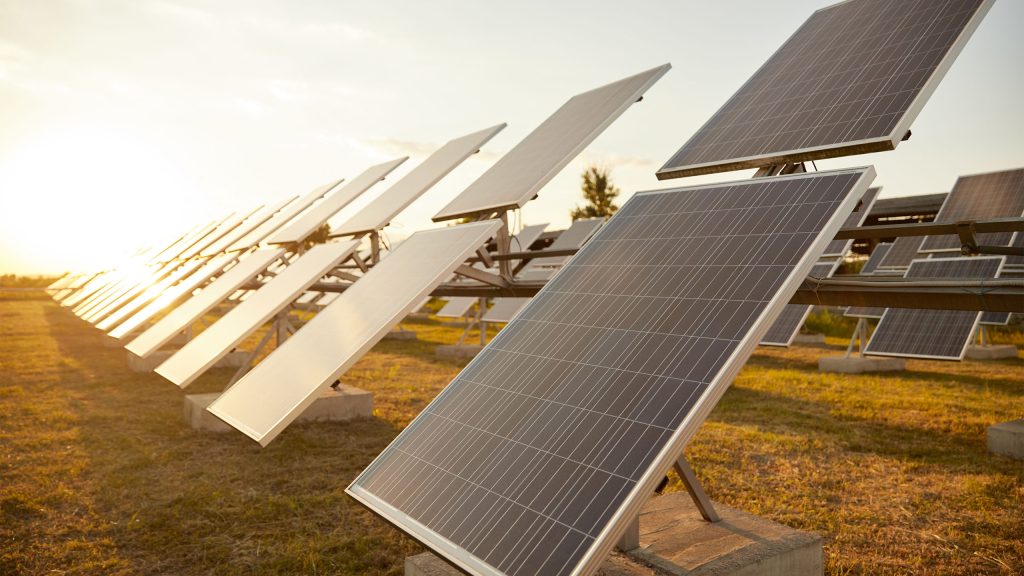
Solar photovoltaic (utility-scale, rooftop and community)
Solar power has been growing significantly in the UK in recent years. And this strong growth is supported by falling panel costs, shorter build times and fewer planning barriers than wind. It can be deployed at very different scales, each with its own investor profile.

Utility-scale solar
Large ground-mounted projects are typically built on agricultural or brownfield land. They often deliver 10 to 15 per cent annual Internal Rates of Return (IRR) and are increasingly co-located with battery storage or even farming (a model known as agrivoltaics).
These sites may sell power directly into the market or under long-term contracts with utilities or corporations.
Commercial rooftop solar
Factories, warehouses, retail parks and public buildings are increasingly fitting rooftop systems. These reduce the host’s energy bills and can be structured under long-term offtake contracts.
Investors may participate through ownership models, leasing agreements or energy-service companies (ESCOs) that fund and operate the systems.
Community and shared solar
Local authorities, co-operatives and public-private partnerships often develop smaller community projects.
These are commonly financed via crowdfunding platforms or direct bond issuance. Returns are more modest but come with strong social impact. Local investors may also benefit from bill discounts or shared dividends.
Solar’s relatively simple planning and technical requirements make it attractive to a wide range of investors. However, most new projects are subsidy-free and rely on merchant revenues or corporate PPAs.
So, investors need to pay closer attention to offtake strategies and pricing risk than in the earlier days of solar.
Who invests in solar?
- Landowners, corporates and local authorities: They host projects on their land, rooftops or estates. This will either be under lease agreements or through direct investment.
- Infrastructure funds and specialist solar aggregators: They acquire portfolios of operational solar farms for long-term yield.
- Crowdfunding platforms and community vehicles: These enable individuals and local groups to invest small sums directly into community projects.
Battery storage and hybrid projects
Battery storage has moved from the sidelines to the centre of the energy transition in the UK.
As more renewable power flows into the Grid, batteries are essential to balance supply and demand. They charge when electricity is cheap or abundant, and discharge when prices rise or the system is under strain.

Storage projects earn revenue in several ways:
- Price arbitrage: Buying electricity when it’s cheap and selling when it’s expensive.
- Capacity market payments: Being paid simply for being available to support the Grid at peak times.
- Ancillary services: Providing fast-response services such as frequency control, which help stabilise the network.
A well-run battery project can deliver returns of up to 25 per cent, but the model is more complex than wind or solar.
Revenues aren’t locked in through long-term contracts, and success depends on active management. These systems often need to use trading algorithms or specialist optimisation partners.
Many storage projects are now co-located with solar or wind farms. This reduces costs, makes better use of grid connections and creates hybrid projects that combine stable generation with flexible storage.
In my opinion, these projects are only going to become more popular down the line.
Who invests in battery storage?
- Specialist storage developers: They build standalone projects or hybrids, often selling them once they’re operational.
- Infrastructure funds with active management: They buy and run portfolios of batteries, often alongside solar or wind.
- Corporates with Grid exposure or ESG goals: They invest in storage to hedge energy costs, improve resilience or demonstrate sustainability leadership.
Anaerobic digestion (AD) and landfill gas (AKA bioenergy)
Bioenergy remains a smaller slice of the UK renewables mix, but it plays an important role by providing baseload power around the country. This system allows electricity and heat to run continuously (unlike wind or solar, which vary with the weather).
- Anaerobic digestion (AD) uses organic material such as crops, slurry or food waste, breaking it down to produce biogas. This can then be used for heat and power or upgraded into biomethane for injection into the gas grid.
- Landfill gas captures methane from decomposing waste, converting it into electricity. While fewer new projects are being built, many existing schemes still generate stable income streams.
These projects often benefit from legacy subsidies such as Feed-in Tariffs (FITs) or ROCs, which guarantee an additional income per unit of energy generated.
Who invests in bioenergy?
- Farmers and agricultural estates: They develop AD plants to monetise slurry and crop residues, or to generate heat and power for on-site use.
- Circular economy investors: They back projects that turn waste streams into valuable energy, often as part of a wider sustainability portfolio.
- Local authorities: They invest in waste-to-energy schemes that reduce landfill volumes and support net zero goals.
Hydrogen-linked renewables
Hydrogen is emerging as one of the most important tools for deep decarbonisation. When produced using renewable electricity to power electrolysers, it is known as green hydrogen. This gas can be used in heavy industry, transport, heating, and as a way to store surplus renewable energy over long periods.
While the technology is still early in its commercial rollout, the UK government has introduced funding support and pilot programmes to build a hydrogen economy. Many of the first projects are co-located with wind or solar farms, using excess generation to produce hydrogen on-site.
Returns are currently uncertain, as the market depends on new subsidy frameworks and the development of hydrogen demand in industry. However, early investors can secure strategic positions in sites, offtake agreements and partnerships that may become highly valuable as the market matures.
Who invests in hydrogen today?
- Large utilities and energy majors: They build early hydrogen hubs linked to offshore wind or solar.
- Venture and innovation funds: They take stakes in electrolyser technology providers and pilot projects.
- Strategic corporate investors: They back hydrogen to future-proof operations in steel, transport, shipping or fertilisers.
How Can You Invest?
Most guides focus on technologies that you can invest in. But few explain how investors can actually access the market.
In reality, there’s no single route into renewables. The right option depends on your capital position, return goals, risk appetite, and whether you want a hands-on or passive role.
Some investors want ownership and upside. Others want steady yield with minimal exposure. And many sit somewhere in between.
So, here are the main ways to invest in renewables and how to pursue each in practice.
Buy land and develop a project from scratch
This route gives you maximum control and a big potential upside. It involves acquiring a suitable site, commissioning environmental and grid feasibility studies, navigating the planning process, and securing a grid connection.
You may choose to build the asset yourself, bring in a development partner, or sell the project once it reaches the RTB stage. Projects are often sold at a significant premium, but the initial investment can be huge.
Returns are highest when value is added early, particularly if planning permission and grid connection rights are secured. But this approach comes with development risk, long lead times (at least three to five years), and a requirement for strong technical, legal and planning expertise.
Most landowners don’t pursue this kind of development alone. Instead, they partner with experienced developers under option agreements, promotion arrangements or joint ventures. These partnerships balance risk and reward while keeping the landowner involved and invested in the process.

Lease land to a renewable energy developer
For landowners looking for passive income, a long-term lease to a wind, solar or battery storage developer is often the most attractive and accessible option.
Under a standard lease model, landowners grant development rights to a project company. They’ll then manage planning, construction and operation. In return, landowners receive an annual rent that’s usually linked to the Retail Price Index (RPI) or Consumer Price Index (CPI) over a term of 25 to 40 years.
Many leases include performance-linked royalties or capacity-based top-ups (for example, percentage of project revenue). Some developers also pay an upfront fee during the option period to reserve the land.
If you want to go down this route, you typically wait to be approached. But many landowners now engage specialist agents to assess their site’s viability and market it to several credible developers. This process helps create competition and secure favourable terms.
Key success factors include proximity to a viable grid connection, land classification, access rights and planning precedent.
This is one of the few renewable investment routes where income is possible without financial capital. You just need suitable land.
If you’re not sure where to start with investing in renewable energy through leasing your land, we’re here to help. Our dedicated Lumify SiteStart™ solution is designed to help landowners and investors take the first step with confidence.
With Lumify SiteStart™, we’ll benchmark your site’s potential, connect you with trusted developers and guide you through negotiations to secure long-term income.


Co-invest or enter a joint venture (JV) with a developer
A JV or co-investment arrangement allows you to share ownership of a renewable project via a SPV.
You might contribute capital, land, energy offtake or strategic value, and you’ll receive a share of project returns (either during operation or at the end of a project).
This model is commonly used by private equity funds, family offices or landowners who want to participate in creating value beyond leasing their land. In some cases, a JV partner might exit at construction and hand the project to an institutional buyer. In others, the JV holds and operates the project long-term.
Entry is typically through direct negotiation with a developer or via introductions from legal, energy or corporate finance advisers. Investment thresholds vary, but six- or seven-figure equity positions are standard.
Buy shares in a renewable infrastructure fund
If you want exposure to renewable energy without owning or operating assets, listed infrastructure funds provide a regulated, low-effort entry point.
These funds (such as Greencoat UK Wind, The Renewables Infrastructure Group (TRIG) or Octopus Renewables Infrastructure Trust) hold portfolios of operational wind, solar and storage projects.
They generate income through long-term contracts (CfDs, PPAs and leases) and distribute it to shareholders as dividends.
Typical annual yields range from 5 to 7 per cent (and up to 10 per cent), and shares can be bought through any stockbroker, SIPP or ISA platform. This makes infrastructure funds a popular choice for income-seeking investors and financial advisers building ESG-aligned portfolios.
While they don’t carry direct development risk, they’re exposed to policy changes and wholesale energy price trends.
Some funds specialise in subsidy-backed projects, and others are increasingly exposed to merchant revenue or newer technologies like battery storage.
Invest in green energy stocks or Exchange-Traded Funds (ETFs)
For investors comfortable with public markets, green equity exposure offers a more growth-oriented route.
This can include:
- Listed operators (e.g. Ørsted, Brookfield Renewable Partners)
- Manufacturers (e.g. Vestas, Siemens Gamesa)
- Storage and hydrogen specialists (e.g. ITM Power, Plug Power)
- Technology providers in inverters, software, EVs or balance-of-system components
Individual stocks can be volatile, and performance often tracks broader market cycles.
For diversification, many investors opt for ETFs such as iShares Global Clean Energy, Invesco Solar ETF or Lyxor New Energy ETF. Each of these tracks a global basket of clean energy equities.
These investments can be made via retail platforms like Hargreaves Lansdown, AJ Bell and Vanguard to name a few. They’re then held within tax-efficient wrappers such as ISAs or self-invested personal pensions (SIPPs).
They’re not infrastructure-backed, but for long-term growth, they can be a practical complement to other renewable holdings.

Back a community or crowdfunded energy project
Platforms like Abundance Investment, Ethex and Ripple Energy allow individuals to fund specific renewable projects. This includes everything from community solar to onshore wind and energy storage.
These are typically debt-based or co-operative structures, offering 4 to 15 per cent annual returns, with minimum investments as low as £50. Some schemes offer bill discounts, local dividends or co-ownership rights.
While they’re not FSCS-protected, most platforms are FCA-regulated and offer transparent reporting on project progress and impact.
This route is great for values-driven investors, local authorities or community groups looking to align capital with social benefit. Liquidity is limited, but so is the downside (especially for low-ticket positions).
Purchase green bonds or gilts
Green bonds offer fixed-income exposure to renewable infrastructure without the volatility (or pressure) of equity or project ownership. These instruments are issued by governments (e.g. UK Green Gilts), banks or corporates to climate-aligned assets.
The UK issued £16 billion in Green Gilts between 2021 and 2022 to support projects aligned with its net zero strategy. Institutions, pension funds and retail investors can access these bonds via platforms or ESG-aligned fixed-income funds.
Green bonds suit investors focused on capital preservation, ESG reporting or lower-volatility portfolios, and can often be held in tax wrappers or SIPPs.
Sign a corporate Power Purchase Agreement (PPA)
If you operate a large business or energy-intensive site, you can secure long-term access to clean energy through a corporate PPA. This is a direct contract with a renewable generator.
This agreement fixes the price of power over 10 to 20 years and provides a degree of cost certainty. Behind-the-meter investments (like rooftop solar or onsite batteries) offer additional resilience here, especially in logistics, manufacturing and data-heavy industries.
These systems are often financed through asset leasing or energy service company (ESCO) models, avoiding upfront capital expenditure. To explore this route, most corporations work with renewable developers, energy consultants or procurement specialists.
What Drives Returns on Renewable Energy Investments?
Renewable energy projects don’t all earn money in the same way. How an asset generates revenue depends on the technology, the contracts in place and the level of exposure to wholesale electricity prices.
Understanding these drivers is essential to judging both the stability and the scale of potential returns.
Contracts for Difference (CfDs)
CfDs are government-backed agreements designed to stabilise revenues.
A project with a CfD is guaranteed a fixed strike price for each unit of electricity it generates. If the wholesale price falls below this level, the government tops it up; if it rises above, the project pays back the difference.
- What this means for investors: Predictable, long-term cash flow with very low price risk. CfDs are the most attractive mechanism for pension funds and institutional investors looking for infrastructure-style yield.
Power Purchase Agreements (PPAs)
A PPA is a private contract between a renewable generator and an offtaker (often a utility or a corporate buyer).
These contracts lock in power prices for 6 months to 20 years to give both parties certainty. Some PPAs now include a ‘green premium’ for renewable electricity.
- Investor perspective: PPAs provide more security than selling into the wholesale market, but revenues will depend on the creditworthiness of the buyer. They’re widely used in subsidy-free solar and wind projects.
Renewables Obligation Certificates (ROCs)
ROCs are a legacy support scheme for older projects, rewarding them with tradeable certificates for each unit of renewable electricity generated. Although the scheme closed to new entrants in 2017, many projects will still earn ROC income until 2037.
- Investor perspective: For those buying older assets, ROCs add an extra layer of guaranteed income. This makes certain projects attractive secondary-market opportunities.
Capacity market payments
The UK’s capacity market pays generators simply for being available during periods of system stress.
These payments are relatively modest compared to energy sales but provide a stable, additional income stream.
- Investor perspective: Particularly useful for flexible assets like storage, which can bid into auctions and stack capacity income on top of trading revenues.
Ancillary services
As the National Grid becomes more renewable-heavy, it needs more support to maintain stability.
Battery storage, in particular, can provide services like frequency response, voltage control and inertia. National Grid pays assets to provide these services.
- Investor perspective: A growing revenue stream that rewards flexibility and technology investment. Critical to the long-term economics of storage.
Lease income for landowners
Where a project is hosted on private land, the developer pays rent to the landowner. This is typically index-linked and may include performance-linked payments or royalties.
- Investor perspective: Provides stable, long-term income without exposure to project performance or market prices. Returns depend on the lease terms negotiated upfront.

What’s Driving the Market?
Net Zero 2050 and binding climate law
The UK has a legally binding commitment to reach net zero emissions by 2050. This isn’t a political ambition that can easily be rolled back; it’s enshrined in law.
For investors, this provides long-term certainty that renewables will remain a policy priority regardless of changes in government.
Capacity targets: solar and offshore wind
To meet this goal, the UK has set ambitious capacity targets: 70 GW of solar and 50 GW of offshore wind by 2035.
Achieving this will require billions in new capital, new development sites and significant Grid expansion.
CfD auctions and revenue stability
The CfD scheme is central to this growth.
By guaranteeing a fixed price for power over 15 years, it de-risks projects for investors and reduces reliance on volatile wholesale markets.
Regular CfD auction rounds ensure a constant flow of new projects coming to market, offering opportunities at both development and operational stages.
Planning reform and faster approvals
Policy barriers are being dismantled. The effective ban on onshore wind in England has been lifted, and solar is receiving growing support in local planning frameworks.
Streamlined approvals are helping reduce timelines and risk for developers, directly benefiting investors by bringing more viable projects forward.
Corporate procurement and net zero commitments
Beyond government policy, private demand is also reshaping the market.
Corporate firms are under growing pressure to meet their own net zero targets and are increasingly signing long-term PPAs with renewable generators.
This provides a reliable offtake market for new projects and another layer of stability for investors.
Managing and Exiting Renewable Investments
Buying or building an asset is only the start of the journey.
The real test of renewable investment lies in how the project is managed day to day and what happens when you choose to exit the investment.
Operational management
Once operational, renewable projects require active oversight to maintain performance and protect cash flow.
This includes:
- Operations and maintenance (O&M) contracts to keep turbines, panels or batteries running efficiently.
- Insurance and warranties, which mitigate risks from equipment failure or weather events.
- Revenue optimisation, such as renegotiating electricity offtake contracts or adjusting trading strategies.
- Regulatory compliance, ensuring assets meet planning, grid and environmental requirements.
For wind and solar, management is largely about maximising uptime and output.
For battery storage and hybrid projects, the focus shifts to optimisation using trading algorithms or specialist partners to capture more value.
Repowering and lifetime extension
As assets age, many developers and investors will need to reach a decision point.
For wind farms built 15 to 20 years ago, repowering is becoming more common. This involves replacing older turbines with fewer, larger, more efficient models. This can as much as triple the output from the same site, without the need to secure new land rights.
For solar, repowering may involve replacing panels with newer, higher-efficiency technology while retaining the same grid connection.
Both strategies can extend project life, increase capacity and boost returns with relatively modest incremental investment.
Exit strategies
Exiting at the right time can cement the value of your investment, and common approaches include:
- Selling to infrastructure funds: Yield-hungry buyers often pay a premium for operational, de-risked assets with long-term contracts.
- Bundling into portfolios: Combining multiple projects increases scale and attracts institutional buyers.
- Refinancing: Owners may raise debt or issue green bonds secured against contracted revenues, freeing up capital while retaining ownership.
- Holding for yield: Some investors choose to operate assets until the end of their economic life and harvest stable income throughout.
A growing secondary market
The UK secondary market for renewable assets has become increasingly liquid.
Institutional buyers are competing for quality projects, particularly those backed by CfDs or long-term PPAs.
This demand drives strong valuations and gives early-stage developers and private investors clear exit opportunities.
For investors, this means renewable projects are no longer illiquid buy-and-hold assets. With the right management and timing, they can be traded, refinanced or repowered to create multiple pathways to return.
Matching Investment Routes to Investor Goals
| Investor Type | Typical Goals | Best-Fit Routes |
| Landowner | Passive income from land | Lease, JV, co-investment |
| Private investor | Growth and yield | Infrastructure funds, green ETFs |
| High net worth individual or family office | Diversified real asset income | SPVs, direct ownership, green bonds |
| Independent financial adviser (IFA) /retail client | Tax-efficient income | ISAs, SIPPs, listed funds |
| Institutional fund | Inflation-linked yield | Aggregated portfolios, repowering platforms |
| Corporate buyer | Energy cost hedge, ESG impact | PPA, rooftop solar, co-invested storage |
Final Thoughts on Investing in Renewable Energy
The UK’s shift to net zero isn’t just an environmental goal. It’s one of the biggest investment opportunities that we’ll see in the coming decades.
With firm policy commitments, growing corporate demand and more ways than ever to access the market, renewables are no longer niche. They’re a mainstream, resilient asset class of their own.
Whether you’re a landowner with available acreage, a business looking to lock in cheaper power prices or a private investor building a diversified portfolio, there’s bound to be a route into the sector that fits your objectives and appetite for risk.


