
A Guide to Renewable Energy Project Taxes for Landowners
 Topic: entity for renewable energy project Topic: entity for renewable energy project |  Read Time: 20 mins Read Time: 20 mins |
 Landowner type: Landowner type:Independent landowners | Institutional landowners |  Energy: Energy:Onshore wind | Solar |
 6th December 2024
Are you a landowner looking for a guide to renewable energy project taxes? This detailed rundown covers everything you need to know and will help make your project as tax-efficient as possible.
The world of renewable energy can be lucrative for landowners. But many landowners simply don’t know where to start when it comes to taxes.
The complexities of income tax, inheritance tax and capital gains tax can feel overwhelming, and it can often make landowners feel as though they’re navigating an unfamiliar minefield.
But don’t worry – that’s where this guide comes in.
It doesn’t matter whether you’re starting a new project, planning an extension of an existing project or simply wanting to do some estate planning to secure your financial future. This comprehensive guide discusses several key tax considerations you’ll want to know about.
In this guide, I’ll walk you through the key taxes associated with renewable energy projects as a landowner. I’ll also explore the tax implications of operating as a limited company, being a sole trader and setting up a trust. This should ensure that you’re equipped to make the best decisions.


Understanding the Different Types of Tax
When dealing with a renewable energy project of any kind, there are several taxes that landowners should know about.
These include:
- Income tax
- Corporation tax
- Inheritance tax
- Capital gains tax (CGT)
- Value added tax (VAT)
There are also tax reliefs available in the form of:
- Agricultural Property Relief (APR)
- Business Property Relief (BPR)
As all of these taxes can impact landowners differently, let’s take a look at each of them in more detail.
Income Tax

Income tax is a key consideration for landowners leasing their site for a renewable energy project. It will be relevant if the landowner is a sole trader or in a partnership.
For sole traders, income is taxed at standard individual rates, while income within a limited company is subject to corporation tax.
Sole traders fall into the following tax brackets:
| Tax Band | Taxable Income | Tax Rates |
| Personal allowance | Up to £12,570 | 0% |
| Basic rate | £12,571 to £50,270 | 20% |
| Higher rate | £50,271 to £125,140 | 40% |
| Additional rate | Over £125,140 | 45% |
It’s important to note that sole traders earning over £125,140 lose their personal allowance entirely. This means that all income is taxed without the benefit of the initial tax-free allowance, which can significantly impact your overall tax liability – especially if your income is substantial due to the size of your land.
Corporation Tax
While incorporating isn’t suitable for all landowners, it may result in a lower overall tax burden. This is because you’ll usually be subject to the corporation tax rates of 19 per cent or 25 per cent. You could then take income from the company as a director in the form of dividends. This income would act as your salary.
You can choose how much income to withdraw from the company based on your financial needs, leaving the remainder in the company to grow. If you don’t take anything out of the company, you won’t pay any personal tax on these earnings.
However, for most landowners, income from turbines is classed as passive rental income. It’s important to consider all your income sources and assess whether incorporating aligns with your overall financial goals and circumstances. This way, you can make an informed decision about whether incorporating is the right call.
In terms of the rules of corporation tax, you can expect to pay the following percentages:
| Rate | 2024 |
| Small profits rate (companies with profits under £50,000) | 19% |
| Main rate (companies with profits over £250,000) | 25% |
| Marginal relief (lower limit) | £50,000 |
| Marginal relief (upper limit) | £250,000 |
| Special rate for unit trusts and open-ended, investment companies | 20% |
Inheritance Tax
Inheritance Tax (IHT) can apply to farmland, but there are specific reliefs available that can reduce the tax liability. To understand how IHT might apply, let’s first take a look at the general rules before considering reliefs specific to farmland.
For an individual with agricultural land valued at £1 million, the standard IHT rate is 40 per cent on the value of the estate above the £325,000 threshold (known as the nil-rate band). Any value above this threshold is subject to IHT.
Now, let’s include a further £1 million of land leased to a wind farm operator. This increases the total value of the estate to £2 million.
| Tax Due |
| Total value of estate | £2,000,000 (assuming no other assets) |
| Nil rate band | (£325,00) |
| Net taxable value of estate | £1,675,000 |
| Less APR | (£1,000,000 – only applicable to agricultural land) |
| Taxable value of estate | £675,000 |
| IHT due at 40% of the taxable value of the estate | £270,000 |
To understand how this works, I’ll need to delve deeper into the valuations of land hosting projects.
The approach usually taken here is to calculate the net present value (NPV) of any income the lease would generate over its unexpired period.
You’d then add this to a residual value that recognises that the land still holds value when the lease expires.
In short, the value of the land is not strictly tied to a renewable energy lease – it’s just bolstered by it.
For IHT purposes, HMRC typically requires a professional valuation from an estate agent or surveyor to accurately assess the value of land with a renewable energy lease.
So, in our example, we’d end up with a final IHT figure (at 40 per cent for this kind of value) of £270,000, as shown in the table above.
Agricultural Property Relief
Agricultural Property Relief (APR) is a form of inheritance tax relief that’s available on the agricultural value of land. To be specific, this applies to land that is owned purely for the purposes of agriculture (so, growing crops, rearing animals or keeping animals for farm work).
This form of relief is available at either 100 per cent or 50 per cent against the agricultural value of the property. So, this wouldn’t apply to the value of the land once you place turbines or panels on it.
In the IHT example above, we have land leased to a wind farm operator with a value of £1 million. If it did not have wind turbines constructed on it, the undeveloped agricultural value of the land would be £400,000. APR would therefore be due on the agricultural value of the land.
It’s quite a complex form of tax relief, but it’s meant to stop IHT from becoming a huge burden on farming families. The Autumn Budget of October 2024 announced a number of changes to APR, so the level of complexity will increase as several adjustments are introduced.
Current Rules
You’ll get 100 per cent relief on any property that fully meets the following conditions:
- The transferor has the right to vacant possession of the property immediately or within 12 months.
- The person transferring the land has held an interest in the property since before 10 March 1981.
- The property is let on a tenancy that began on or after 1 September 1995 (otherwise known as a Farm Business Tenancy).
- The property has been occupied by the transferor for at least two years (and this must end with the date of transfer).
- The property is owned by the transferor throughout the period of seven years ending with the date of transfer.
If you can’t meet the above, you’ll get relief at 50 per cent on the agricultural property.
APR usually applies to woodland (used for agriculture), buildings used for rearing livestock, farm cottages, farmhouses and farm buildings. There are limited agricultural uses for woodland, and these do not include timber production.
As of 2025 and 2026, there are set to be a few critical changes to APR which I’ll outline below.
April 2025 Changes
From 6 April 2025, land managed under an environmental scheme will also qualify for APR. These schemes are designed to ensure that the land is sustainably managed over the long term.
April 2026 Changes
From 6 April 2026, the value of APR as a relief is significantly reduced. Under the previous rules, if APR was available, it could be used to take qualifying agricultural land out of the charge to IHT.
After April 2026, it is still necessary to look at whether agricultural assets qualify for 100 per cent or 50 per cent relief. However, the 100 per cent relief will be restricted to the first £1 million, with the value of any land in excess of this £1 million threshold being taxed at 50 per cent, giving an effective rate of IHT of 20 per cent.
Business Property Relief
Business Property Relief (BPR) is a potentially valuable inheritance tax relief for business owners. The relief can come in at either 100 per cent or 50 per cent and is usually available after owning a business for two years.
As with APR, the autumn budget in 2024 has reduced the value of APR for disposals after April 2026.
It essentially reduces the value of a business property for inheritance tax purposes. This means that business-related assets can usually be passed on without being subject to inheritance tax.
Business Property Relief (BPR) is quite complicated, and you need to be actively carrying out a trade to qualify for it. Unfortunately, hosting wind turbines alone wouldn’t be classed as carrying out a trade by HMRC. But it may be possible to argue that the operation of a farm with wind turbines amounts to a single trade depending on how your business and accounts are run.
To understand this better, we need to look at the Balfour Test.
Named after Lord Balfour, it’s often used as the criterion against which an estate is measured for this specific purpose.
For context, Lord Balfour owned the Whittingehame Estate comprised of:
- Three let farms
- 26 let cottages
- Two in-hand farms
- Two commercial units (also let)
- Woodlands and parks
In the Balfour case, HMRC argued that the business’s operations were diverse enough to be ineligible for BPR. But the executors of the estate claimed that Lord Balfour managed all business decisions and that everything was managed as a single, composite business.
HMRC argued that letting multiple rental properties meant that the estate did not qualify as engaging in business activity. Instead, they said that these made the estate more investment-related. However, the tribunal actually ruled in Lord Balfour’s favour, letting the partnership qualify for full BPR relief (AKA: 100 per cent).
The tribunal made this decision for the key reasons that:
- The estate was all owned by Lord Balfour and he made all business decisions.
- The accounts were largely combined under one roof, showing that the business was running as a single entity.
If the estate was operating as multiple businesses, BPR would only apply to trading activities (which wasn’t really applicable to Lord Balfour’s endeavours here, making BPR essentially useless).
Because of the Balfour case, I certainly recommend that landowners review how their business is managed. Whether that’s consolidating accounts or running all transactions through a single account, it’s worth considering. For BPR, it’s also important to assess how dominant renting your land is to your overall business.
To maximise BPR, you’ll also want to be careful not to include too many assets in your estate. This heightens the risk of BPR being denied if the level of investment or assets become too high.
As with APR, the October 2024 budget brought in changes to BPR. Only the first £1 million of assets will qualify for 100 per cent relief. The £1 million threshold is a combined threshold for APR and BPR. Assets in the estate in excess of £1 million will qualify for BPR at 50 per cent.

Capital Gains Tax
Capital Gains Tax (CGT) is a tax on the profit of a sold asset that has increased in value. It can apply to stocks and shares, land, possessions, collectables, jewellery, and even digital assets.
For 2024/25, the rate of CGT will depend on the date of the disposal.
Disposals made before 30 October 2024 will be charged at either 10 per cent or 18 per cent if you’re on the basic rate of tax.
The higher rate applies if the asset is your residential property. For higher-rate taxpayers, it’s 24 per cent on residential gains and 20 per cent on other asset gains. If the capital gain pushes you into the next bracket, you’ll pay some CGT at both rates.
For disposals made on or after 30 October 2024, the 10 per cent basic rate increases to 18 per cent, and the 20 per cent higher rate increases to 24 per cent. There are no changes to the rates for residential property.
There is an annual exempt amount for capital gains, meaning you can make a certain gain before paying tax on an asset. But as this is just £3,000 for 2024/25, landowners are unlikely to benefit much from this.
Value Added Tax (VAT)
If the income generated from your project is greater than £90,000, then you will need to think about a VAT registration.
Most income from transactions involving the sale or leasing of land is exempt from VAT. So, if you are receiving a pure rental income stream, then this will be exempt from VAT.
It is possible to make an Option to Tax on the rent you receive, making it subject to VAT. You may want to make this election if you have project-related costs and incur VAT on these costs. If the rent is exempt from VAT, you won’t be able to recover any of the VAT incurred. By opting to tax, you can recover any VAT paid on these costs.
Many farms use the Agricultural Flat Rate Scheme (AFRS), and if the non-farming income exceeds £90,000, you can’t stay in the Flat Rate Scheme. Therefore, going over the VAT threshold will also impact the farming business, as it will no longer be eligible for the AFRS.
Specialist VAT advice in this area is always recommended.
Which Entity Should I Choose for My Project?
If you’re relatively new to renewable energy project taxes, you might be unsure where to start.
Maybe you’re currently being taxed as a sole trader or a limited company, but you know very little about trusts. Or you might currently be a sole trader interested in the tax benefits of placing rental income into a limited company.
If you’re struggling with the potential tax burden of a renewable energy project, let us guide you through your main options.
These are:
- Being a sole trader or partnership
- Incorporating and forming a limited company
- Setting up a trust
Sole Trader
Sole traders and partnerships are taxed on what a wind farm brings in as direct income to the landowner.
So, you’ll pay personal taxes on all income generated from the project. Generally, you’ll get a personal allowance and then pay in increments for basic rates, higher rates and additional rates.
If your renewable energy project makes significant amounts of rental income, you may not want to venture in as a sole trader as the taxes will very quickly add up.
Limited Company
Setting up a limited company means creating a distinct entity that is completely separate from its owners.
Often, limited companies make it easier to secure loans or investments, but they also reduce the personal liability of a company’s shareholders and directors.
This is typically because if a company goes under for any reason, assets can only be recovered from the company, not the shareholders.
On another note, it would also be possible to have your adult children or beneficiaries set up as shareholders of any limited company. In these scenarios, they’d share in the income that comes out of the company. You’d then be in a position to allow your children to draw salaries or become shareholders.
Using a company allows you to determine when the tax is paid – you only pay tax when you take a salary or dividend. In contrast, as a sole trader or in a partnership, income tax is charged as soon as the profit is earned, regardless of when it is withdrawn.
Dividends are the money paid to shareholders after corporation tax is deducted. And most landowners (if they go down the limited company route) will be both directors and shareholders.
Just so you’re aware, dividends are subject to the following tax rates:
| Tax banding | Annual Income | Percentage taxed |
| Personal allowance | Up to £12,570 | 0% |
| Basic rate | Between £12,570 – £50,270 | 8.75% |
| Higher rate | Between £50,271 – £125,140 | 33.75% |
| Additional rate | Above £125,140 | 39.35% |
As the rate for regular sole trader income tax is usually far higher than these figures, getting project income paid into a limited company may be beneficial.
Corporation tax is also usually less than the tax you’d pay if you took money out of the company as a director.
It’s certainly worth getting an opinion from a trusted accountant before going down this road.
Trust
Your final option for renewable energy project taxes lies with trusts.
Before I get into this, I’ll say that trusts can be complex, costly and time-consuming to set up. However, they can offer benefits to families, including tax advantages in some cases.
So, let’s take a look at your options if you’d like to manage your assets through a trust.
To start with, let’s define what a trust is.
A trust is a ‘legal arrangement for managing assets’, and they’re usually held and managed by a single person (or people) to benefit another person (or people).
The person providing the assets is called the settlor (the landowner, in this case). The settlor can put a wide range of assets into a trust. This includes cash, property, shares or land – and land is exactly what we’re interested in here.
Settlors generally decide how a trust should operate, and this is outlined in a trust deed.
Trustees, on the other hand, are the legal owners of what’s held in the trust. They’ll usually manage the trust and pay any taxes, decide how to invest assets and deal with the assets as the settlor wants them to.

Another important party in a trust is the beneficiaries. This can be a group of descendants, an individual or unnamed family members, such as grandchildren or a remote issue. ‘Remote issue’ refers to more distant descendants of an individual, such as great-grandchildren or descendants further down the family tree.
They typically benefit from the income from a trust, the capital only, or both the income and capital in a trust.
Trusts are often written into wills, but they can be set up at any convenient time with a solicitor. The solicitors will advise on what assets can be settled into trust, who the trustees should be and how to nominate beneficiaries.
When assets are gifted into a trust, care needs to be taken to make sure that the donor does not incur a tax charge at that time.
The best time to make the settlement is ideally before the project has received planning permission. This is because the transfer of agricultural land into the trust will qualify for two valuable tax reliefs:
- The settlement will be treated as a chargeable lifetime transfer for IHT purposes. However, either APR or BPR should be available on agricultural land. If the transfer is made after 6 April 2026, then any settlement in excess of £1 million will only be relieved at 50 per cent of the value transferred. If the gift takes place after the turbines are constructed, these reliefs may not be available.
- A gift is treated as a disposal for CGT purposes, with the effect that the donor is treated as selling the asset at its market value. It is possible to make a claim for holdover relief so that CGT is paid in the future if the trust sells the land. At that point, the gain would be calculated based on the donor’s original acquisition cost.
These reliefs may make it possible to gift land into a trust without giving rise to an immediate tax charge.
How are trusts taxed?
In terms of taxes, what you’ll need to be aware of are income tax, inheritance tax and capital gains tax:
- With CGT, you’ll pay a tax on the profit when assets have increased in value OR have been put into or taken out of your trust.
- With inheritance tax, you’ll pay it when assets are put into a trust, the trust reaches its 10th anniversary, assets are transferred out or the trust comes to an end, or someone dies and the trust is part of their estate.
- When it comes to income tax, you’ll need to pay it as a beneficiary or a trustee.
- Most trusts don’t need to pay income tax up to £500, but anything above that is subject to income tax.
- If you’re the beneficiary of a bare trust, you’ll need to pay income tax on it.
- If you’re dealing with an Interest in Possession trust, you’ll pay 8.75 per cent on dividend-type income and 20 per cent on all other income.
- For accumulation or discretionary trusts, it’s 39.35 per cent on dividend-type income and 45 per cent on all other income.
| Income Tax | Dividend tax | Capital Gains Tax |
| Additional rate | 45% | 39.75% | |
| Higher rate | 40% | 33.75% | 24% |
| Basic rate | 20% | 8.75% | 10% |
To make this slightly clearer, let’s look at this from a beneficiary’s perspective.
When the beneficiary receives income from the trust, this is treated as having a tax credit attached to it (of 45 per cent). If the beneficiary is an additional rate taxpayer, no further tax will be due. They can claim a repayment if they are taxable at a basic rate or a higher rate.
If the beneficiary’s income causes an additional tax rate liability, there’ll be no further tax due on the trust income. But if the beneficiary is only liable for the basic or higher rate, they’ll receive a tax refund.
What does a trust need to do when it comes to its activity?
While you may be familiar with trusts as charitable endeavours (like the Prince’s Trust, for example), a trust doesn’t need to be charitable.
Although charitable trusts are more likely to get tax breaks that wouldn’t be available to family trusts, trusts can still be surprisingly efficient for landowners dealing with renewable energy project taxes.
There are usually restrictions on what activities the trust can carry out. And it’s up to the trustees to decide what the trust is allowed to do with its assets. However, the settlor can fully instruct the trustees on what they should do.
Just be warned, you’ll want to have a professional asset manager dealing with most trusts. This is because they can become complex if they’re covering multiple generations.
If land is settled into a trust (which is likely in this scenario), there may be little for trustees to do with regard to asset management. However, they may be able to sell some or all of the land and reinvest any proceeds in other assets.
Is a limited company or a trust more beneficial for a landowner?
If you’re looking to be as efficient as possible with renewable energy project taxes, you may be weighing up limited companies and trusts as your top options.
The main differences between a company and a trust come with ownership structure and control:
- A limited company is usually controlled by shareholders. These shareholders are allowed to determine the company’s direction and how much income they’ll take from the company.
- A trust is controlled by the trustees. The trustees are the ones who decide how to distribute the income of the trust and how it operates.
For landowners, trusts can be seriously beneficial if the settlor (AKA: the landowner) wants to maintain control over how beneficiaries can access assets. But they can’t sell the assets unless the trustees agree.
In the long term, you’ll want to look at the significance of the assets you’re holding. This includes the value of the land itself and the potential income from a renewable energy project.
If the potential value (or actual value) is significant and the assets wouldn’t qualify for any reliefs, trusts can offer a tax advantage. This is because once an asset is in a trust, there will be no question of future inheritance tax.
However, companies can be a better option if a company needs to expand operations or undertake significant development. For landowners, this would possibly be a better option if they were self-developing a wind farm or solar project. A company may be able to raise share capital from new shareholders or borrow money from a bank.
Unconnected parties cannot be given the right to receive income from a trust, and although trusts can take on loans in certain circumstances, the process is more complicated than the financing options available to a company.
What Are the Tax Differences Between Solar and Wind Projects?
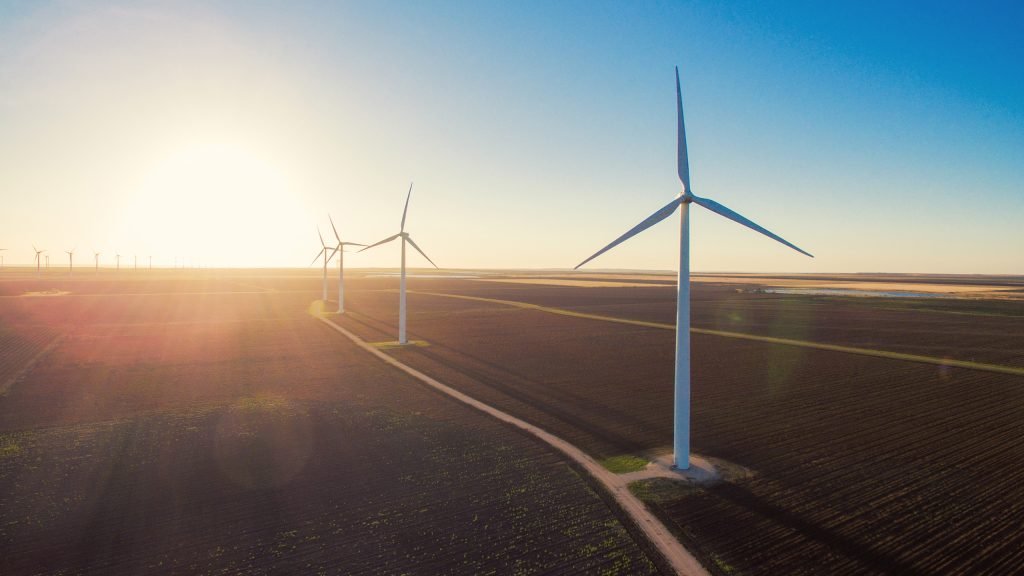
The main difference between taxes for solar and wind projects lies with Agricultural Property Relief (APR).
As I mentioned previously, to qualify for APR, you need to be using the land for agriculture. While land hosting wind turbines typically wouldn’t be suitable for grazing or growing, you could argue that land used for solar projects can support this.
This is largely down to space. There’s usually enough room under and around solar panels to graze livestock (providing you’re careful with cable maintenance, of course).
While there isn’t always enough space to justify this at every site, several sites would still qualify for APR with solar panels on their land.
Remember that you’ll only receive APR on the agricultural value of the land – not the entire value. So, the APR assistance you get wouldn’t take the value of the solar panels into account.
The difference between the actual value of your agricultural land and the land with panels or turbines on it is likely to be quite significant. It’s important to recognise this to avoid any shocks when your APR allowances come through.
What About Councils and Charities?
The position for councils should be relatively straightforward, as local authorities are exempt from corporation tax and income tax. So, if they receive rental income for hosting renewable energy projects, there should be no tax liability on that income.
If they set up a separate trading company, there is the possibility that this income could be taxable. However, this would depend on whether the council is doing more than just renting out the land.
For charities, the most tax-efficient approach is to place the land into a trading company. The charity could then give the profits back to the charity as a gift, allowing the gift to be tax deductible.
How Can Things Change With Project Sizes and Energy Prices?
It probably goes without saying, but as project size and energy prices increase, you’ll likely experience a greater tax burden.
For example, a very small project yielding little income may allow you to operate as a sole trader. Whereas large-scale projects can come with hefty tax implications.
As with most renewable energy projects, every successful one starts with a watertight lease agreement. For landowners, this outlines exactly what income they’re set to receive for leasing their land.
Is It All Bad News For Landowners with Large Projects?
In short, absolutely not.
While higher energy prices and larger projects can lead to a greater tax burden, this doesn’t mean landowners should shy away from maximising the income they receive when negotiating lease agreements.
While the tax burden for a project certainly increases with size, reducing your tax liability is all about planning in advance. Speaking to experts when you’re setting up your lease is critical, as they’ll know exactly how to reduce your tax liability long term. In theory, this should put you in the best possible position for your current lease and for any future leases.
If you’ve never set up a project before and aren’t sure where to begin, our Lumify SiteStart™ solution can help you increase your deal value by up to 125 per cent. By looking at how much is being paid at comparable projects around the UK, this tool is able to accurately value a potential project using real market insights. Not only will this give you peace of mind, but it’ll maximise your income.


If you already have a renewable energy project on your land, you may have a lease renewal looming instead. In these cases, I see far too many landowners accepting a first offer without checking whether or not they’re getting a good deal.
With our SiteScan™ solution, we’ll compare your project to thousands of similar ones across the UK. If we find you’re not getting up-to-date market rates and terms, we’ll help you renegotiate your deal. We can even help you transition to a new developer if yours decides not to renew the project for a second term.


Compare your rent with hundreds of wind farms across the UK
Get the best possible lease with help from the UK’s top solicitors
100% of landowners we work with increase their rent negotiation offers
What Does the Future Hold?
Energy prices have been gradually rising over the last few decades, and they’re only set to jump further in the future. While energy prices have fallen since summer 2023, they’re still sitting far above the levels seen before the energy crisis. If we consider that inflation is also at its sharpest now than it has been in the last 40 years, it’s easy to see why the UK is feeling the pinch.
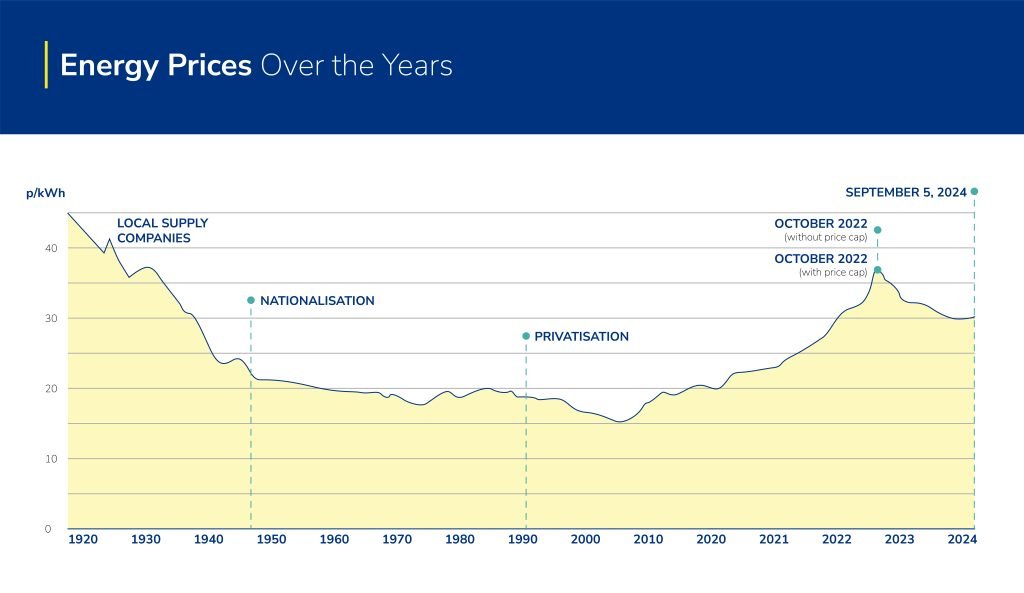
Now, this isn’t a positive thing for the average pocketbook. However, higher energy prices should lead to more income for landowners.
With average energy prices continuing to rise, it’s critical that landowners make sure their overall payments increase with inflation. By working this clause into your lease, you won’t be short-changed as prices continue to climb.
Building a project yourself
If you’re setting up a project on your own, you’ll have far more costs than if you’re working with a developer.
If you’re self-developing, you’ll be dealing with large construction costs, as well as payments to site operators to run the project once it’s built. You’ll also need to raise capital, carry out any feasibility studies, organise planning permission and sort Grid connection.
Should you choose to self-develop, you’ll need to decide on the entity under which you’re building the project. So, this would involve a decision about building as a limited company or as a sole trader. You’ll also need to think about paying VAT (but being able to reclaim it) on all materials purchased that are related to the project.
You’ll also need to think about inheritance here.
As you own the project and aren’t just leasing the land, you’ll need to have the land valued properly. When your final estate is valued, it should include the entire value of the project. This figure should include the equipment used in the project and the fact that the revenue from it will be significantly higher.
You may also want to consider gifting throughout your lifetime to try and reduce your overall inheritance tax burden over time. As you may be passing on the project after death, you’ll also need to have adequate succession planning outlined in a solid will.
Ready to Dive In?
Now that you have a decent idea of the renewable energy project taxes you need to think about, why not get in touch? We can guide you through getting a new project on your land or help you find the best deal for an existing one.
After all, while ensuring tax efficiency is one thing, you’ll want to ensure you’re getting compensated fairly for leasing your land.


